
Show Notes
Emergency Recovery Begins Before the Emergency
A quiet weekend can become a tenant-impacting incident fast. In this episode of Built, Wired & Secured, the conversation centers on a common operational failure: an outage that should have been a quick restore becomes a prolonged disruption because a spare key is missing and the on-call vendor cannot be reached.
The lesson is not to stockpile equipment or make sensitive access broadly available. It is to prepare a compact, well-governed Emergency Recovery Kit that removes avoidable delays while maintaining security, accountability, and an auditable record of what happened.
The discussion stays deliberately non-technical and vendor-neutral. It focuses on decision rules, ownership, documentation, custody, and readiness validation—practical controls property and operations leaders can begin implementing this week.
The Failure Patterns That Turn Small Outages Into Long Disruptions
Recovery delays often result from a chain of small gaps rather than one major technical failure. The recurring issues discussed include:
- Missing physical spares, keys, or critical small parts.
- Temporary access or authorization that is not documented or available to the person on site.
- Vendor contacts that cannot be reached when an incident occurs outside normal hours.
- No vetted fallback communications path for coordinating recovery.
- One missing item blocking the next recovery step while teams wait for an off-shift vendor or authorization.
These gaps are especially painful because tenants experience the outcome immediately. Pressure to restore service quickly can also encourage risky shortcuts. A recovery kit creates a controlled alternative: teams can act quickly within preapproved boundaries instead of improvising access during a stressful event.
Design for the Smallest Convenient Surface
The central governance principle is simple: design for the smallest possible convenient surface that still gets the job done. A kit should be minimal, role-focused, and built around actual recovery decisions.
Making everything easy to access creates unnecessary risk. Locking everything down so tightly that nobody can act creates unnecessary downtime. The practical middle ground is controlled access, limited contents, clear authority, and a short auditable handoff whenever the kit is used.
Each item should answer four questions:
- What recovery problem does this item address?
- Which role is allowed to use it?
- Under what authority may it be accessed?
- What evidence must be recorded after use?
What Belongs in a Compact Emergency Recovery Kit
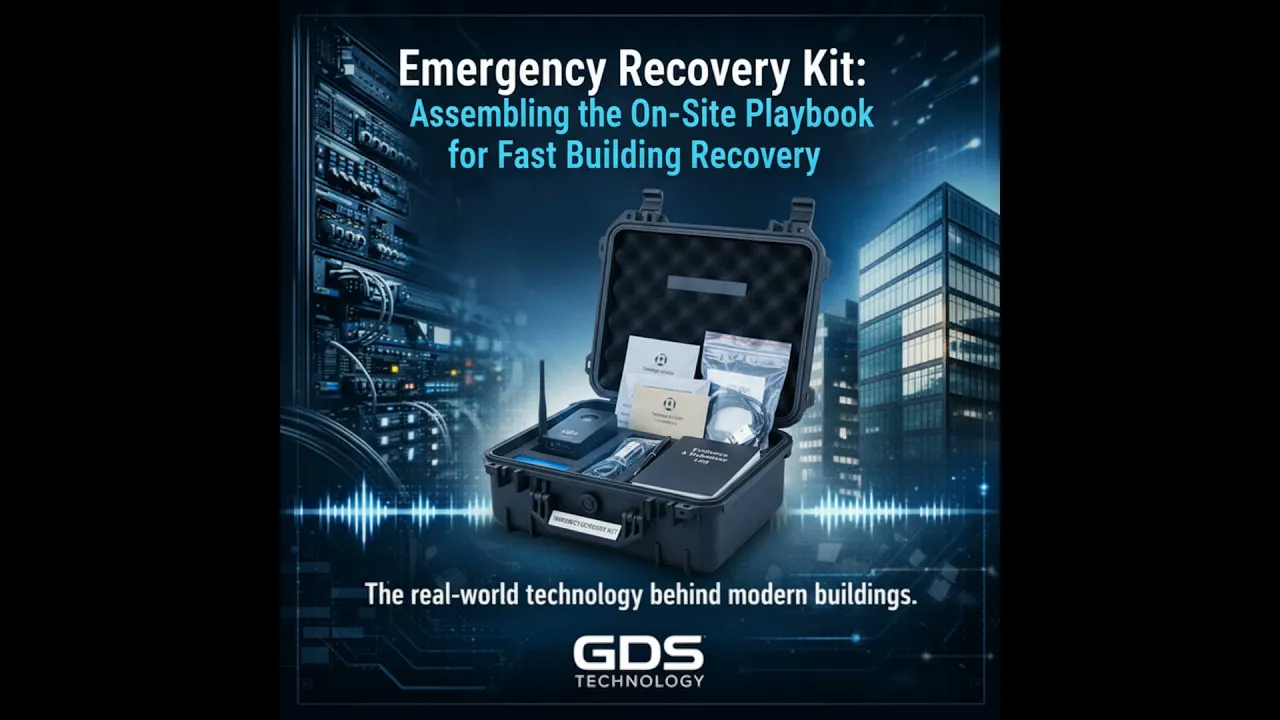
The recommended kit is intentionally short: roughly three to seven critical items. The goal is not to create a closet full of supplies. It is to place the few items that repeatedly slow recovery into a controlled, documented package.
- A small set of physical spares for commonly failing items.
- One vetted fallback communications device with preapproved contacts and a power plan.
- Sealed temporary-access tokens or authorization forms that are time-limited and signed.
- A signed evidence-packet template documenting what was accessed, why it was needed, and what occurred.
- Basic identification materials and a printed contact escalation tree.
The important point is that the kit is mapped to roles and recovery decisions. A useful kit is not defined by the quantity of gear inside it. It is defined by whether the right person can make the right authorized decision without searching for a key, a contact, or a form while tenants are affected.
Temporary Access and Evidence Without Technical Exposure
Temporary access should be established ahead of time and used only under specific recovery conditions. In governance terms, a sealed temporary-access token is a physical or documented authorization created in advance, signed by an approving authority, and opened only when defined conditions are met.
It includes an expiration and clear rules for use. That structure gives teams a path to act without turning emergency access into standing broad access.
The evidence packet travels with the person using the token. It should capture:
- Who accessed what.
- Why access was required.
- Relevant timestamps.
- Signatures from the site lead and a witness.
- Actions taken and return details after use.
This record preserves an audit trail, supports accountability, and reduces post-incident finger-pointing. Documentation is not a burden added after the work; it is part of the operating model that allows fast action to remain secure.
Ownership, Storage, and Chain of Custody
A recovery kit fails when it becomes a forgotten box in a closet. The episode recommends a named operations-side owner accountable for maintenance and custody, with a secondary owner in security or facilities.
The storage location should be predictable, secured, access-controlled, and documented. Keep the kit near the operations center, but not in plain sight. Sealed containers make opening noticeable, while sign-out requirements and evidence-packet completion create a consistent record of every use.
A straightforward chain-of-custody process can be adopted quickly:
- Document the triggering condition before opening the kit and obtain approval from the owner.
- Have the person retrieving the kit sign it out and take the evidence packet.
- Require a witness or secondary contact to sign the packet at the site.
- Return items immediately after use, record actions taken, and have the owner complete a post-use audit within a defined window.
Three Lightweight Readiness Tests
Readiness needs to be proven before a real incident, without disrupting tenants or making unnecessary system changes. Three lightweight checks were recommended:
- 30-minute retrieval drill: A staff member must locate, sign out, and arrive on site with the evidence packet within 30 minutes.
- Quarterly evidence-packet audit: Randomly sample a packet to confirm it was completed correctly and that return actions were documented.
- Six-month fallback communications bootstrap: Validate the alternate communications path with a short scripted exchange focused on reachability and contact confirmation.
Run drills off hours where possible, and notify tenants in advance if they could notice activity. The objective is simple: confirm that the kit, the paperwork, the people, and the communications path work together.
Three Actions to Take This Week
- Name the kit owner and a backup, then include those responsibilities in a role description or operations checklist.
- Create a one-page contents list and a sealed evidence-packet template focused on decision points and accountability.
- Schedule a 30-minute retrieval drill within 30 days and a fallback communications check within 90 days.
As the episode concludes, be conservative about what goes into the kit and liberal about documentation. That balance helps protect security, speed recovery, and reduce the friction that compounds when something goes wrong. Visit the Built, Wired & Secured resource hub for the Emergency Recovery Kit one-pager, checklist, custody template, and sample evidence packet.
Emergency Recovery Kits: A Practical Way to Reduce Building Downtime
Many building incidents do not become prolonged tenant disruptions because the original fault is unusually complex. They become prolonged because a small but critical recovery dependency is missing at the wrong moment.
A weekend outage is a familiar example. The building is quiet, the night crew is gone, and an issue that should be quickly restored begins generating calls. A spare key is not where it should be. The on-call vendor cannot be reached. The person at the site lacks the documented authority to take the next step. What should have been a short interruption stretches into hours, or longer.
For property and operations leaders, the business consequence is immediate. Tenants lose time, staff are pushed into stressful decisions, and the pressure to restore service can tempt teams to bypass normal controls. The better answer is not to weaken security for the sake of speed. It is to plan a small, governed Emergency Recovery Kit before the emergency occurs.
The Real Cause of Recovery Drag
When recovery slows down, it is often because of a chain of manageable gaps. A missing spare can block a physical step. A missing authorization can prevent the person on site from acting. A vendor contact that does not answer can stop escalation. Without a vetted fallback communications option, teams may be unable to coordinate the people who need to make a decision.
None of those issues necessarily requires a major technology project to address. They require operational discipline: identifying what repeatedly slows recovery, assigning ownership, documenting authority, and validating that the process works.
An Emergency Recovery Kit is a way to turn those lessons into a repeatable operational capability. It creates a deliberately limited set of physical items, access materials, contacts, and documentation that support fast action under defined conditions.
Speed and Security Are Not Opposites
It is easy to frame emergency preparation as a choice between convenience and security. If everything is readily available, the risk of inappropriate access rises. If everything is tightly restricted, recovery slows when people need to act outside normal hours.
A stronger approach is to create the smallest convenient surface that still supports recovery. In practice, that means the kit should be minimal, role-focused, and governed. It should contain only items tied to a specific recovery decision, and each item should have clear rules for who can use it, when it can be used, and what documentation must be completed.
This approach accepts a small amount of intentional friction. A sign-out, an approval, a witness signature, and a post-use audit may take a few minutes. Those minutes are far less costly than an uncontrolled shortcut, a missing audit trail, or hours spent searching for someone authorized to act.
What a Compact Kit Should Include
The most useful emergency kit is not necessarily large. A practical target is three to seven critical items, selected based on the failure patterns that matter most in a specific building or portfolio.
That compact set can include a small number of physical spares for commonly failing items, a vetted fallback communications device, temporary authorization materials, an evidence-packet template, identification materials, and a printed escalation tree. The communications device should have preapproved contacts and a power plan. The contact tree should make it clear who is called, in what sequence, and when escalation moves to the next role.
The kit should not become a collection point for everything a team might someday want. Every item should map to a real recovery problem and a defined role. The question is not, “Would this be nice to have?” The question is, “Would this item remove a recurring decision or delay during a legitimate incident?”
Use Temporary Access as a Governed Exception
Emergency access is often necessary, but it must be designed as a controlled exception rather than a standing convenience. A sealed temporary-access token or authorization form should be created in advance, signed by an approving authority, and opened only when the predefined recovery condition exists.
The authorization should make its temporary nature clear. It needs an expiration, specific use rules, and an accountable person who can determine when conditions justify opening it. This allows the team to move when there is a real need without exposing access more broadly than necessary.
Equally important is the evidence packet. This is a concise signed form that accompanies the individual using the temporary authorization. It records who accessed what, why the access was required, relevant timestamps, and the actions taken. It should include space for the site lead and a witness or secondary contact to sign.
The evidence packet protects the organization in two ways. First, it produces a usable audit trail. Second, it clarifies the facts after the incident, reducing ambiguity and finger-pointing. Governance works best when it supports the team during the event and explains the event afterward.
Give the Kit a Real Owner
A box without an owner is eventually a forgotten box. Ownership must be assigned to a named role on the operations side, with accountability for maintenance and custody. A secondary owner in security or facilities provides continuity and oversight.
The owner’s responsibilities should be visible in an operations checklist or role description. Those responsibilities include reviewing contents, maintaining the contact escalation tree, ensuring containers remain sealed, confirming that evidence packets are available, and scheduling routine readiness checks.
Storage must be both predictable and secure. Keep the kit in a documented, access-controlled location near the operations center, but not in plain sight. Sealed containers are useful because opening is noticeable. The retrieval procedure should be simple enough to follow under pressure but structured enough to establish accountability.
Build a Repeatable Chain of Custody
Chain of custody is what keeps a recovery kit from becoming an informal work-around. It creates a short, repeatable sequence that protects security and operational speed at the same time.
- Before opening the kit, document the triggering condition and obtain approval from the designated owner.
- The person retrieving the kit signs it out and takes the evidence packet to the site.
- A witness or secondary contact signs the packet at the site.
- After use, return the items immediately, document the actions taken, and have the owner perform a post-use audit within a defined window.
These steps are intentionally uncomplicated. In a real incident, complex procedures are likely to be bypassed. A short process that teams can actually execute is more valuable than an elaborate policy that is never used correctly.
Test the Process Before Tenants Need It
A kit is only valuable if people can find it, use the documentation, and communicate through the backup process under realistic conditions. Testing does not need to be disruptive or technical.
Start with a 30-minute retrieval drill. A staff member should be able to locate the kit, sign it out, and arrive on site with the evidence packet within 30 minutes. This validates storage, access, ownership, and the handoff process.
Next, conduct a quarterly evidence-packet audit. Randomly sample a completed packet to confirm that signatures, timestamps, actions, and return details are being documented. This helps identify weak practices before the organization relies on the process during a significant incident.
Finally, run a fallback communications check every six months. Use a short scripted exchange to confirm reachability and contact information. No system changes are required. The purpose is to verify that the alternate path works and that the people listed in the escalation tree are actually reachable.
Where possible, run these tests during off hours. If there is any possibility tenants could notice activity, communicate in advance.
Start With Three Immediate Actions
Property and operations teams do not need to wait for a major project to improve emergency readiness. Begin with three practical actions:
- Name a kit owner and backup this week, then document those responsibilities.
- Create a one-page contents list and a sealed evidence-packet template focused on authority, decisions, and documentation.
- Schedule a retrieval drill within 30 days and a fallback communications check within 90 days.
These steps establish the foundation: ownership, documentation, and validation. From there, a team can refine the kit based on real incidents, drill results, and recurring recovery delays.
The guiding principle is straightforward: be conservative about what you place in the kit and liberal about documentation. A compact, well-governed Emergency Recovery Kit helps preserve security while removing the preventable friction that can turn an outage into a long tenant-impacting event.
Listen to the full Built, Wired & Secured episode for the practical discussion, then visit the resource hub for the Emergency Recovery Kit checklist, custody template, and sample evidence packet.