
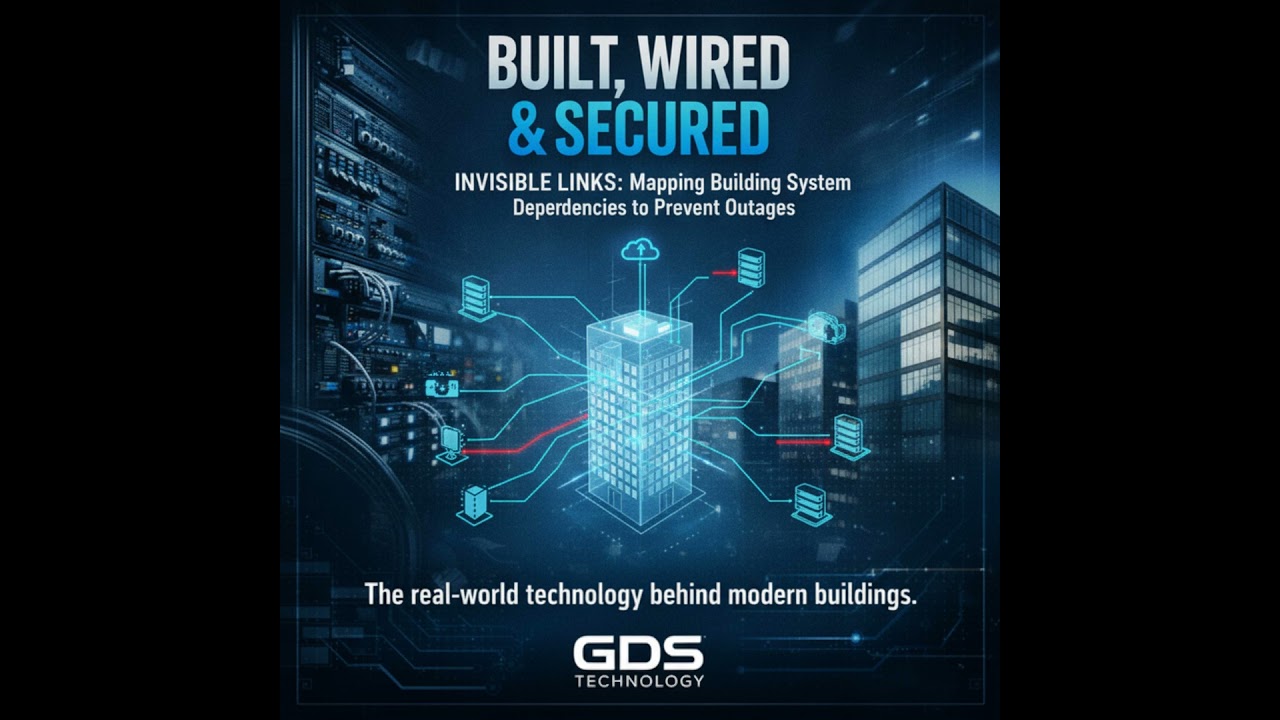
Show Notes
When Small Failures Trigger Bigger Building Problems
This episode focuses on a problem every owner, operator, and facilities leader eventually faces: a minor technical issue creates a tenant-facing disruption far larger than anyone expected. The conversation opens with a vivid example. A fourth-floor tenant is dealing with heat during an all-hands meeting because a small temperature sensor in a closet dropped offline. That single failure changed automated behavior elsewhere, and the result was an operational issue tenants noticed immediately.
The central message is simple: most building outages are not isolated events. They happen because systems depend on other systems in ways that are not always obvious to the people responsible for keeping the property running. If teams do not have a clear picture of those dependencies, they end up troubleshooting in the dark instead of restoring service quickly.
What an Operational Dependency Map Should Actually Do
The guests argue that the first question on every map should be: what breaks if this goes down? That framing keeps the map focused on operational impact instead of technical trivia. The point is not to create an engineering schematic. The point is to give owners and operations teams a practical decision tool they can use during the first 10 minutes of an incident.
An owner-facing dependency map should show:
- Major systems such as HVAC, access control, elevators, and security monitoring
- Primary power dependencies and incoming power sources
- External network links
- Cloud services that influence building operations
- The owner of each node
- The operational impact if that node fails
- The immediate escalation contact
This gives decision-makers a fast way to see where a problem will spread, who needs to be called, and how quickly service may degrade.
What Belongs in the Secured Technical Appendix
The episode makes a clear distinction between what owners need to see and what technicians need to access. The public or owner-facing layer should stay focused on impact, responsibility, and escalation. The technical appendix is where the deeper details belong.
The secured appendix can include:
- Network segments
- Console endpoints
- Vendor support details
- Service level agreements
- Maintenance notes
- Administrative procedures
Just as important, the episode stresses what should not happen: sensitive technical material and credentials should never live in a casually shared folder. Access to the appendix should be limited to vetted staff and approved contractors.
How to Mark Single Points of Failure Without Creating Security Risk
One of the strongest practical points in the conversation is how to document risk without exposing exploitable technical detail. Instead of listing exact server addresses or detailed access paths, the recommendation is to label consequence rather than implementation detail.
For example, instead of documenting a specific server address, the map should describe that a central service controls building access and BAS functions and should note any available workaround, such as local badge failover. That communicates urgency and business impact without giving away sensitive information.
The guests also caution listeners to document assumptions clearly. If the map assumes a spare pump exists on site or that a manual badge override is still available, that assumption needs to be verified. When those assumptions age out, the map can create false confidence at exactly the wrong time.
A Lightweight Way to Build a Useful Map
This is not presented as a massive documentation exercise. The recommended starting point is a 60 to 90 minute workshop that brings together operations, IT, and one vendor. On a whiteboard, teams should identify major systems, draw the key power and network dependency lines, and annotate who to call and what fails.
The episode emphasizes that one focused session can produce more operational clarity than weeks of scattered email. From there, the output should become a living document:
- Put the owner summary in a shared read-only location
- Store the appendix in a secure vault
- Pilot the approach on one building
- Validate it during a maintenance window
- Then scale the process to the rest of the portfolio
The recommended rhythm is straightforward: discover, map, validate, and schedule the next review.
How Smaller Portfolios Should Scope the Work
The discussion also addresses a common concern: not every owner has the resources to maintain a huge technical map. The practical answer is to start smaller. For smaller portfolios, the recommendation is to track three critical dependencies, one fallback for each, and a single tested escalation path.
That said, simplicity should not weaken accountability. If a vendor manages a dependency, the owner still needs meaningful operating detail. The episode specifically calls out the need for standby SLA expectations, on-site response times, and a named escalation path. In other words, “the vendor handles it” is not enough when a system is down and tenants are affected.
How to Use the Map, Not Just File It Away
The guests identify three places where dependency maps should actively be used:
- Commissioning
- Outage drills
- Owner and vendor handoffs
During commissioning, teams should validate whether each dependency behaves as documented. In drills, they should simulate failures and time the escalation process. In handoffs, the map should travel with the building knowledge so operational context is not lost when vendors or ownership structures change.
One practical drill example in the episode asks what happens when the external network fails at 3 p.m. and how that affects access control, BAS, and analytics. In another case, a 90-minute drill exposed a 12-minute vendor callback delay, and fixing that materially reduced future outage impact.
Three Actions to Take This Week
If you want to get started immediately, this episode gives a clear checklist:
- Run a 60-minute workshop with operations, IT, and one vendor to draft a one-page map covering three critical dependencies and any single points of failure
- Document the escalation contact and expected response SLA for each node
- Schedule a 30 to 60 minute outage drill next month to validate one dependency
The guests also add two important habits: capture assumptions in plain language and review the map after any major vendor change or capital project. If you do not have a spares policy for critical parts, now is the time to create one.
Why This Matters
The biggest takeaway from this conversation is that dependency mapping is not just a documentation exercise. It is an operations tool. It improves incident response, strengthens handoffs, supports commissioning, and helps owners make better capital and vendor decisions. Most importantly, it gives teams a practical way to shorten the gap between “something is wrong” and “we know what to do next.”
Preventing Building Outages Starts With Seeing the Dependencies No One Talks About
When building systems fail, the first visible symptom is rarely the real root cause. A tenant complains that a floor is too hot. Access control slows down. Security monitoring goes blind. Elevators start behaving unpredictably. What operators discover later is that the triggering issue was much smaller: a sensor dropped offline, a network path failed, a cloud dependency stalled, or a vendor-managed system did not respond the way everyone assumed it would.
That is the core lesson in this episode of Built, Wired, and Secured. Small failures become major tenant-facing disruptions when teams do not have a practical map of how critical building systems depend on power, networks, cloud platforms, vendors, and specific people.
The conversation makes a strong case for building what the guests call an operational dependency map: a compact, owner-friendly artifact that helps teams answer the most important question during the first minutes of an incident: what breaks if this goes down?
Why Most Teams Struggle During the First 10 Minutes
In the episode’s opening example, a fourth-floor tenant is dealing with heat during an all-hands meeting because a small temperature sensor in a closet dropped offline. From there, automated sequences did the rest. That scenario feels familiar because it happens across commercial properties all the time. The visible problem is not the same as the originating problem, and without a dependency picture, teams chase symptoms instead of causes.
That first 10-minute window matters. Tenants are already calling. Facilities is under pressure. Vendors may or may not be reachable. If there is no clear map of how systems connect, response becomes reactive and fragmented.
This is why the episode pushes for impact-first documentation. Not a dense engineering drawing. Not a pile of vendor PDFs. A practical map that helps owners and operators understand business impact, escalation paths, and the likely chain of failure before the outage expands.
What the Owner-Facing Map Should Include
One of the most useful distinctions in the episode is the difference between an owner summary and a technical appendix. The owner-facing map should stay concise and operational. It should help non-technical decision-makers see what matters quickly.
According to the discussion, the summary should include major systems such as HVAC, access control, elevators, and security monitoring. It should also identify the main dependencies behind those systems, including incoming power sources, external network links, and cloud services that control or influence operations.
For each node, the summary should answer a few practical questions:
- Who owns this system or dependency?
- What happens if it fails?
- Who should be called first?
- How quickly does service degrade?
This is what makes the map useful to owners and operations leaders. It translates technical architecture into consequences and response decisions.
What Should Be Locked in the Technical Appendix
The technical appendix serves a different audience. This is where teams can store the detail technicians and trusted contractors need during troubleshooting, maintenance, and restoration work. That may include network segments, console endpoints, vendor support structures, service levels, maintenance notes, and administrative procedures.
But the episode is equally clear about security discipline. Credentials should not be stored in a shared drive. Sensitive technical material should be limited to vetted staff and approved contractors. If the owner summary is designed for broad operational visibility, the appendix is designed for controlled access.
That separation matters because it lets the organization be operationally transparent without being operationally careless.
How to Document Single Points of Failure Safely
Many building leaders hesitate to document single points of failure because they worry the map itself could become a security problem. The episode offers a smart workaround: label consequence, not detail.
Instead of documenting a precise internal address or technical endpoint, describe the function and the operational consequence. In other words, note that a central service controls building access and BAS functions, then document the available workaround or failover path. That gives owners the information they need to prioritize response without exposing sensitive implementation details.
This principle is especially useful for buildings with mixed operational technology, vendor-managed platforms, or limited internal IT support. The goal is not to publish a blueprint. The goal is to make risk visible in a controlled way.
Do Not Ignore Assumptions
A subtle but important point in the conversation is the danger of stale assumptions. Many buildings operate on unwritten beliefs: there is a spare pump on site, manual badge override is still available, the vendor still answers within a certain window, or a fallback process exists because it existed two years ago.
If those assumptions are wrong, the map gives teams a false sense of readiness.
That is why assumptions need to be written in plain language and tagged with an expiration or verification date. If the entry says a temporary manual bypass exists, someone should periodically confirm it still does. If the map assumes a spare part is on site, inventory should prove it. These are small administrative details that can have a major operational impact during a live event.
How to Build a Map Without Turning It Into a Documentation Project
The process recommended in the episode is intentionally lightweight. Start with a 60 to 90 minute workshop involving operations, IT, and one vendor. Use a whiteboard. Identify the major systems. Draw their power and network dependencies. Mark who to call and what fails.
This approach works because it is collaborative and fast. Rather than waiting for perfect documentation, teams build an operational draft based on real working knowledge. After that, the map becomes a living document.
The suggested workflow is practical:
- Create the owner summary and store it in a shared read-only location
- Create the technical appendix and store it in a secure vault
- Pilot the process on one building
- Validate the map during a maintenance window
- Then scale the format to additional buildings
The discussion boils the operating cycle down to four words: discover, map, validate, schedule the next review.
What Smaller Portfolios Should Do First
Not every owner can support a detailed 50-node dependency map with constant updates. The episode addresses that directly. For smaller portfolios, the recommendation is to keep the scope narrow and useful: identify three critical dependencies, define one fallback for each, and document one tested escalation path.
That is a practical starting point because it forces prioritization. Which three dependencies would cause the biggest tenant-facing impact if they failed? Which fallback options are real, not assumed? Which escalation path has actually been tested?
At the same time, the episode pushes back on the idea that simplicity should reduce accountability. If a vendor manages a critical dependency, contracts should still define standby expectations, on-site response times, and a named escalation contact. “Vendor-managed” is not an operating strategy. It is just a label unless it comes with measurable response obligations.
How to Operationalize the Map
A dependency map only creates value if teams use it. The episode points to three practical use cases: commissioning, outage drills, and handoffs.
During commissioning, the map helps verify that systems behave the way documentation says they should. Does the transfer switch actually perform as expected? Does network loss affect downstream systems the way the team believes it will?
During outage drills, the map becomes a training tool. Teams can simulate a specific failure and practice the escalation path. In one example from the episode, a 90-minute drill revealed a 12-minute vendor callback delay. That is exactly the kind of gap that stays invisible until someone tests it.
During owner and vendor handoffs, the map preserves operational knowledge. That matters during portfolio transitions, staffing changes, and capital projects, when practical system knowledge often disappears between stakeholders.
Three Practical Next Steps
If you are responsible for a building or a portfolio, this episode offers a short, realistic starting point:
- Run a 60-minute workshop with operations, IT, and one vendor to draft a one-page map for three critical dependencies
- Document the escalation contact and expected response SLA for each node
- Schedule a 30 to 60 minute outage drill next month to test one dependency
The guests also add two smart operating habits: review the map after any major vendor change or capital project, and create a spares policy for critical parts if one does not already exist.
Why This Matters for Owners and Operators
The value of dependency mapping is not theoretical. It improves incident response, reduces outage impact, supports better handoffs, strengthens commissioning, and informs capital planning. Most importantly, it gives owners and operators a common operational picture they can use before a disruption becomes a bigger business problem.
If your building team is still relying on tribal knowledge, vendor memory, or scattered documentation, this episode is a clear reminder that resilience starts with visibility. A short workshop and a one-page map may not solve every issue, but they can dramatically improve the way your team responds when the invisible links inside the building start to fail.
If this topic is relevant to your properties, this episode is worth a listen. It is practical, specific, and built around actions teams can actually take this month.