
Show Notes
When Documentation Fails, Operations Fail
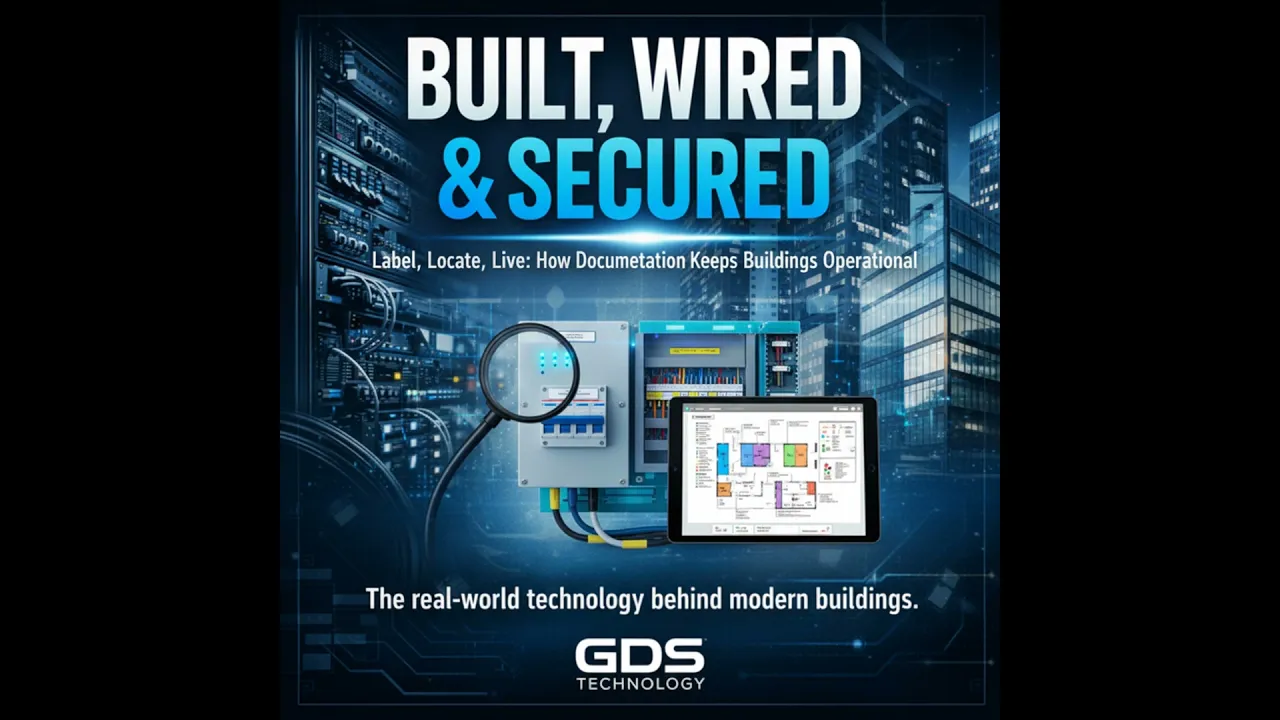
In this episode of Built, Wired & Secured, Alex Morgan and Michael Harrington dig into a building operations problem that is easy to underestimate until it causes a real outage: bad documentation. The conversation opens with a scenario many property teams can picture immediately. A contractor flips what they believe is a low-voltage breaker, only to shut down power to half a floor. Lighting drops, access control stops working, and tenants are left dealing with a disruption that should never have happened. The root cause was not failed hardware. It was a bad label and outdated documentation.
From there, the discussion makes a clear point: documentation is not administrative overhead. It is an operational control. When labels, as-builts, panel schedules, floorplans, and change logs are inaccurate or hard to access, mean time to repair increases, vendor coordination gets harder, and capital planning becomes less reliable. Teams lose time simply figuring out what they are looking at before they can even begin fixing the problem.
Why Documentation Breaks Down After Turnover
Michael explains that documentation rarely becomes unusable because of one dramatic failure. It usually degrades through routine operational habits. The pattern is familiar: trades work in silos, changes are made under time pressure, and no one owns the single source of truth once a project turns over. Temporary fixes are made to keep systems running, but the updates never make it back into the drawings or panel schedules. Later, those undocumented changes become hidden risks.
One example from the episode stands out. A tenant installed a supplemental UPS in a server closet to protect critical systems. The change solved an immediate need, but nobody updated the drawings. Months later, maintenance crews used the original single-line diagram, isolated the wrong panel, and unintentionally took down both the tenant's critical load and building back-office systems. What started as a practical workaround became an avoidable operational failure because the change was never recorded as part of the permanent environment.
- Trades often operate independently without a shared update process
- Urgent fixes are completed before documentation is revised
- Vendor turnover erodes institutional knowledge over time
- Buildings lose a reliable single source of truth after turnover
How Much Documentation Is Enough?
The episode also addresses an important practical question for owners and facilities teams: how complete does documentation really need to be? The answer depends on risk, complexity, and the cost of downtime. A small retail site may only need a one-line electrical diagram, accurate breaker labels, and a basic asset list. A multi-tenant office building or campus needs much more layered detail, including risers, floor-level schematics, cable paths for critical low-voltage systems, and clearly labeled physical infrastructure in the field.
Rather than treating documentation as an all-or-nothing exercise, Michael frames it as a business decision. If losing a circuit can trigger tenant claims, business interruption, or expensive SLA penalties, better drawings and stronger version control are not optional. Even lower-risk properties still need ownership, labeling standards, and a documented change log. The goal is not perfection for its own sake. It is matching documentation quality to operational impact.
Digital First, but Usable in the Field
Another useful takeaway is the discussion around digital versus paper. The answer is not either-or. The recommendation is digital-first management with printed access at the point of work. Master drawings should live in a controlled repository with versioning, whether that is cloud storage or an asset management platform. At the same time, field teams need laminated copies inside panels and closets because work often happens offline, on ladders, and under time pressure.
That blend of searchable digital masters and durable field artifacts improves both governance and execution. It also reinforces the idea that documentation must be designed for use, not just storage.
- Store master files in a versioned repository
- Keep printed, laminated copies in panels and closets
- Standardize label formats and placement
- Make drawings accessible where real maintenance work happens
What Good Documentation Prevents
Michael shares a strong contrast from his portfolio. In one case, a contractor had to de-energize a panel serving a data center tenant with a complex redundant feed. Because the panel schedule matched updated as-built drawings and each breaker was clearly labeled with the panel, breaker number, and affected tenant systems, the crew isolated the correct upstream breaker and completed the work in under an hour with zero tenant downtime.
At another property, ambiguous labels turned a similar task into a five-hour event and caused a tenant SLA credit. The difference was not a sophisticated new technology stack. It was documentation hygiene: accurate labels, updated drawings, laminated panel maps, and a single-line diagram in the cabinet.
Three Actions to Start Now
The episode closes with a practical phased plan that teams can use immediately.
- In 30 days: assign a documentation owner for each site, walk critical electrical and low-voltage closets, fix mislabeled breakers, and place laminated field copies in cabinets
- In 90 days: consolidate drawings into a single versioned repository, require change requests to include documentation updates, and standardize labels across the portfolio
- In 365 days: tie documentation audits to annual capital planning, make living documentation part of contractor acceptance criteria, and measure the impact through mean time to repair
The broader lesson is simple but important. Documentation only works when it becomes routine. If teams treat it as a living operational asset rather than archived paperwork, outages get shorter, repairs get faster, and both tenants and staff feel the difference.
Key Themes From the Episode
- Documentation is an operational control, not back-office paperwork
- Mislabeled breakers and stale drawings directly increase outage risk
- Governance matters more than fancy tools
- Temporary fixes become long-term problems when they are not recorded
- Small investments in labeling, field copies, and version control can prevent major disruption
If this topic hits close to home, this episode offers a realistic framework for improving documentation without overcomplicating the process. It is a practical conversation about reducing downtime, improving vendor coordination, and protecting building operations before the next avoidable outage begins.
Why Documentation Is a Building Operations Issue, Not an Admin Task
In commercial buildings, documentation is often treated like the final box to check at project closeout. Drawings are handed over, panel schedules are printed, files are placed in a shared drive, and everyone moves on. The problem is that buildings do not stay frozen at turnover. Systems change. Tenants add equipment. Contractors make quick fixes. Electrical pathways get adjusted. Low-voltage infrastructure gets extended. If the documentation does not keep up, teams are no longer operating the building they think they are operating.
That is the core message in this episode of Built, Wired & Secured. Alex Morgan and Michael Harrington focus on a practical truth that property teams, engineers, and vendors all eventually confront: bad documentation creates real operational risk. Not theoretical risk. Not paperwork risk. Actual downtime, slower repairs, confused vendors, tenant frustration, and preventable business interruption.
The opening example makes that point immediately. A contractor flips what they believe is a low-voltage breaker during a routine test. Instead, power to half a floor drops. Lighting goes out, access control is affected, vending machines stop, and the on-site team scrambles to understand what happened. Different vendors are working from different drawings. The breaker label points to the wrong tenant suite. A routine task becomes a three-hour outage. The failure did not begin with bad hardware. It began with documentation that could not be trusted.
What Documentation Actually Controls
One of the strongest ideas in the episode is the reminder that documentation is an operational control. That phrase matters because it reframes the entire conversation. Labels, as-builts, floorplans, single-line diagrams, risers, panel maps, and change logs are not passive records. They shape how quickly a team can understand a system, isolate a problem, coordinate vendors, and restore service.
When documentation is inaccurate or inaccessible, every maintenance event gets harder. Mean time to repair goes up because teams waste time confirming what should already be known. Vendor coordination breaks down because each party may be working from a different version of reality. Capital planning becomes less precise because scoping work depends on knowing what is actually installed and how systems are connected.
This is why documentation quality affects business outcomes. The issue is not whether a set of drawings exists. The issue is whether those drawings still reflect the building that operations teams and vendors are maintaining today.
Why Documentation Degrades So Quickly
Michael gives a straightforward answer to a question many teams have asked after a messy outage: how did documents go from accurate at turnover to unreliable so fast? His answer is simple and believable. People, processes, and handoffs.
Buildings are supported by multiple trades operating in parallel. Electrical, low voltage, HVAC, security, and specialty vendors each touch the environment from their own perspective. After turnover, the responsibility for maintaining a single source of truth often becomes unclear. If nobody owns the update process, the documents stop matching the building almost immediately.
The other major failure pattern is urgency. Temporary fixes get installed to solve immediate operational problems, but the documentation update gets deferred. Once the crisis passes, the update is forgotten. Over time, undocumented changes stack on top of each other until the official records are no longer dependable.
Vendor rotation adds another layer of risk. When contractors or staff change, informal knowledge disappears with them. If the building depends on someone remembering that a closet was re-fed, a UPS was added, or a panel schedule was marked up by hand, then the building is relying on memory instead of process. That is a fragile operating model.
The Hidden Cost of the “Temporary” Fix
A particularly useful example in the episode involves a tenant that installed a supplemental UPS in a server closet to protect critical systems. The move made sense in the moment. The need was immediate, and the workaround restored confidence. But the change was never added to the drawings, and the UPS was tied into an alternate bus that the official documentation did not reflect.
Months later, a maintenance team followed the original single-line diagram and isolated the wrong panel. Instead of protecting operations, the undocumented fix contributed to an outage that affected both the tenant's critical load and the building's back-office systems.
This example captures the real danger of poor documentation hygiene. The problem is not that teams make practical decisions under pressure. The problem is that emergency changes become permanent infrastructure without permanent documentation. Once that happens, future work is being performed against false assumptions.
How Much Documentation Is Enough?
Not every site needs the same level of detail, and the episode handles that nuance well. A small retail property does not need the same documentation package as a campus or a multi-tenant office building. The right standard depends on risk, complexity, and the cost of an outage.
For a smaller, lower-impact site, a one-line electrical diagram, clear breaker labels, and a basic asset list may be enough to support routine operations. For larger or more complex buildings, teams need layered information: one-line drawings, floor-level schematics, risers for power, cable path visibility for critical low-voltage systems, and clearly labeled physical panels and cabinets.
The useful business lens here is outage impact. If a service disruption can cost tens of thousands of dollars per hour in tenant claims, lost productivity, or SLA penalties, stronger documentation controls are easy to justify. Even when the risk is lower, ownership and change tracking still matter. The standard may scale, but the discipline cannot disappear.
Digital First, Field Ready
The episode also avoids a common false choice between digital and paper. The recommendation is practical: digital first, but with printed access at the point of work.
Master documentation should be stored in a controlled repository with versioning. That could be cloud storage or an asset management platform, as long as there is a defined process for updates and retrieval. But digital storage alone is not enough. Field crews work in mechanical rooms, electrical closets, and ceilings. They are often on ladders, offline, and under time pressure. They need labels and drawings where the work is happening.
That is why laminated field copies in panels and closets matter. When paired with versioned digital masters, they reduce both governance risk and field execution risk. Teams can search and control the official files while still giving technicians immediate, usable information in the moment.
Standardization also matters here. Label formats and placement should be consistent enough that anyone walking into the environment can quickly find the information they need. Documentation only helps if people can trust it and use it without interpretation delays.
What Good Documentation Looks Like in Practice
One of the clearest examples in the conversation comes from a data center tenant with a complex redundant feed. During scheduled maintenance, a contractor needed to de-energize a panel. Because the panel schedule matched the updated as-built drawings and every breaker was clearly labeled with panel, breaker number, and affected tenant systems, the team isolated the correct upstream breaker and completed the work in under an hour with zero downtime.
That result stands in direct contrast to a similar event at another property where ambiguous labels turned the work into a five-hour disruption and triggered a tenant SLA credit. The gap between those outcomes was not driven by better hardware. It was driven by better information. Small investments such as laminated panel maps and a single-line diagram in the cabinet changed the speed and confidence of execution.
A Simple 30-90-365 Plan
The most actionable part of the episode is the phased rollout plan.
In the first 30 days, teams should designate a documentation owner for each site, walk critical electrical and low-voltage closets, correct mislabeled breakers, and place laminated field copies in cabinets. This is the fastest way to reduce obvious operational risk.
Within 90 days, the focus should expand to governance. Consolidate drawings into a single versioned repository. Require change requests to include documentation updates. Standardize label formats across the portfolio so different properties and vendors are not working under different conventions.
Over 365 days, documentation should become part of the operating system of the portfolio. Build audits into annual capital planning. Tie contractor and vendor deliverables to acceptance criteria that include living documentation. And importantly, measure the result. Track mean time to repair on critical incidents before and after making these changes. That data helps justify investment and keeps accountability in place.
The Bigger Business Lesson
The broader lesson from this episode is that documentation should be treated as part of infrastructure stewardship. Buildings become harder to operate when the information layer around them degrades. Teams may still keep things running, but they do it with more guesswork, more delay, and more risk.
For commercial real estate leaders, facilities teams, and operations-focused ownership groups, the takeaway is straightforward. If you want faster repairs, fewer avoidable outages, smoother vendor coordination, and better confidence in project scoping, documentation cannot live as an afterthought. It has to be owned, updated, accessible, and routinely verified.
That is where a true Technology Partner adds value. The goal is not simply handing over closeout documents or finishing the latest upgrade. It is helping clients build operational environments that stay understandable over time. Accurate labels, current as-builts, clear change workflows, and field-ready documentation reduce disruption because they make systems easier to support in the real world.
If this episode surfaces familiar pain points, that is a sign to act while the problem is still manageable. Review the critical closets. Confirm the labels. Consolidate the drawings. Decide who owns updates. Small moves in documentation hygiene can produce outsized gains in uptime, response speed, and tenant confidence.
To hear the full conversation and the examples behind these recommendations, listen to the episode and use it as a starting point for your own documentation review.