
Show Notes
When "It Works at Install" Becomes Operations Debt
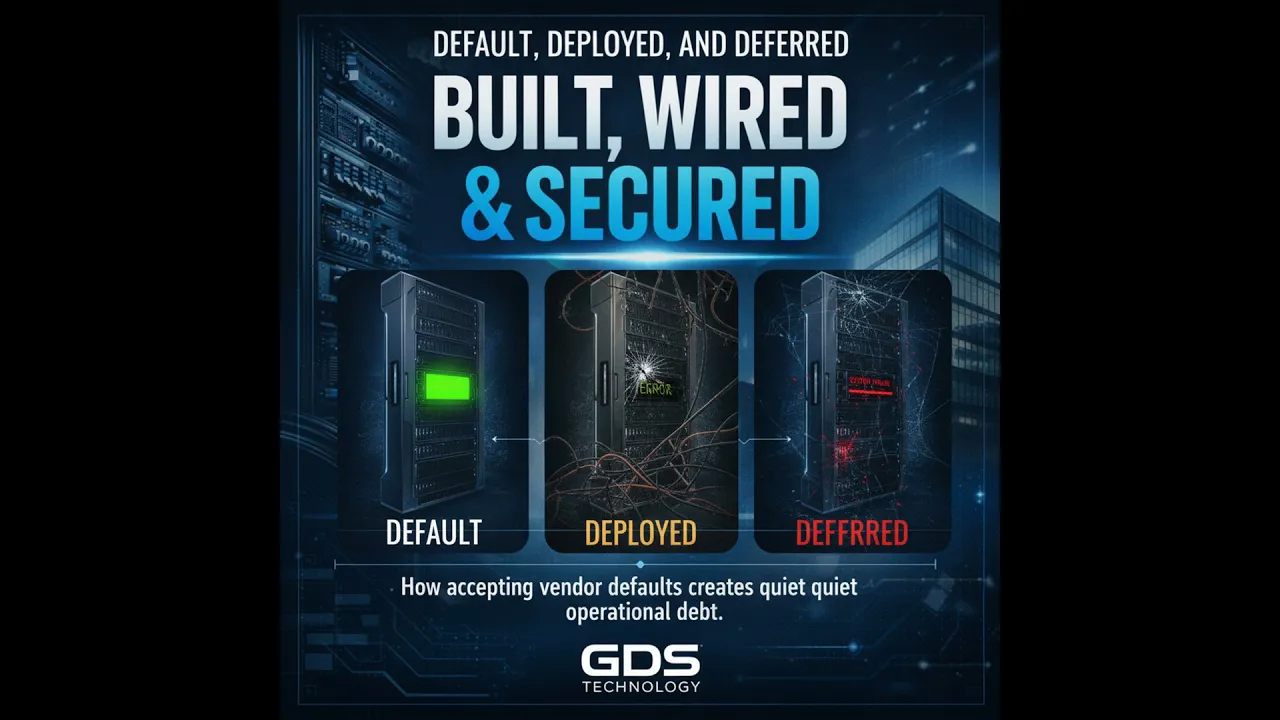
This episode of Built, Wired & Secured opens with a scenario that feels painfully familiar in commercial buildings: a late-night maintenance call, tenants reporting HVAC cycling, and a manager discovering that most zones are stuck in economy mode because "those are the default settings." What looked acceptable during installation becomes a real operational problem once tenants are in the space and the building has to perform under normal conditions.
Alex Morgan frames the issue clearly: small undocumented settings can turn into quiet operational debt. By morning, the building team is dealing with angry emails, a spike in utility costs, and no clear record of who approved the schedule in the first place. That is the pattern this conversation explores: why defaults persist, who absorbs the consequences, and what building teams can do in the next 30 days to reduce risk without disrupting tenants.
Why Defaults Survive the Handoff
Michael Harrington and James Rogers point to a mix of causes rather than a single failure point. Installers are racing to turn projects over. Owners want buildings live on schedule. Vendors want sign-off. If a system works well enough during a demo, changing the default configuration can feel like introducing unnecessary risk. The result is that documentation often stops at "it works," while the practical baseline of how the system is actually configured never gets written down.
That creates a major gap at turnover. Operations inherits a system that passed a demonstration but may still behave like a black box in day-to-day use. The team may get usernames and a massive manual, but not the clear, usable record of schedules, alarms, admin access, firmware levels, and expected operating conditions they need to manage the environment confidently.
- Installation timelines reward speed over long-term maintainability.
- Ownership of the baseline is often unclear after turnover.
- Documentation may confirm functionality without recording intent.
- Facilities teams are left without a repeatable starting point for preventative work.
The Real Cost of Leaving Defaults Alone
The conversation makes the cost visible. Michael describes a cascade that starts small and spreads: security posture erodes, energy use drifts upward, tenant comfort suffers, diagnostics become noisy, and operations teams spend nights troubleshooting instead of planning. In other words, the damage is not limited to one line item. Defaults can affect budgets, service quality, and the ability of facilities teams to run a stable environment.
Two examples make that risk tangible. In one project, lighting remained in demo mode in a 150,000-square-foot tower. That single setting showed up as a few thousand dollars a month in extra utility costs, while tenants also complained about glare. In another case, an economizer left at vendor defaults caused over-ventilation during winter. Filters clogged, energy costs increased, and maintenance cycles were thrown off. Correcting damper schedules and adding a single monitoring point brought maintenance back to normal and reduced waste.
These are not giant capital projects. They are small configuration decisions with outsized operational consequences.
Balancing Risk, Effort, and Practicality
A useful part of the discussion is the acknowledgment that not every system requires the same level of effort. Owners and operators are always balancing up-front work against the chance that nothing breaks. The answer, the guests argue, is to make that decision intentionally and on a risk basis.
If a system affects tenant comfort, critical equipment, or sensitive data, the baseline should be hardened and formal commissioning gates should be in place before turnover. If the risk is lower, teams can still document the default state, add monitoring, and schedule a deferred hardening window. The key is not perfection everywhere. It is clarity about where strict control matters most and where lightweight governance is enough.
That tension comes through in a useful exchange between Michael and James. Michael pushes for harder turnover gates on systems touching tenant comfort or security. James argues that "no exceptions" does not scale across every system and every property. The resolution is practical: define risk thresholds up front, enforce strict gates for high-criticality systems, and use documented baselines plus scheduled reviews for the rest.
- High-criticality systems need hard turnover gates.
- Lower-risk systems still need documentation and monitoring.
- Risk thresholds remove ambiguity from handoff decisions.
- Intentional choices outperform undocumented defaults and luck.
A 30-Day Playbook Building Teams Can Actually Run
The strongest part of the episode is how quickly it turns from diagnosis to action. When Alex asks for high-impact steps a facilities leader can take in the next 30 days without disrupting tenants, the answers stay concrete and manageable.
- Record baselines, including schedules, admin accounts, and firmware versions.
- Match alarm schedules to real tenant hours to reduce false wakeups.
- Tag critical endpoints so teams know what matters most during troubleshooting.
- Keep spares and a firmware log for critical devices.
- Run a one-day post-install audit and document any changes made.
These recommendations matter because they are realistic. They do not assume a six-week project or a major retrofit. They assume operations teams need low-friction controls that are easy enough to maintain over time. Minimal telemetry, a quick firmware inventory, and a simple change-control step can eliminate a surprising amount of avoidable noise and uncertainty.
Small Reversible Changes, Big Operational Wins
The guests close with examples that reinforce the broader theme: the best improvements are often small, visible, and reversible. Moving lighting out of demo mode and into occupancy schedules with daylighting adjustments reduced energy use enough to cover contractor costs within months while also ending tenant complaints. A single damper schedule change plus one monitoring point stabilized maintenance and cut energy waste. These are not abstract governance concepts. They are operational improvements that teams can repeat.
Key Takeaways
This episode is a reminder that defaults are not neutral just because they came from a vendor. If they are left undocumented, unreviewed, and unowned, they become a hidden liability for operations, budgets, and tenant experience. The practical fix is to convert default settings into intentional, documented baselines and apply stricter controls where risk is highest.
The closing advice is simple and useful: record baselines now, protect critical endpoints with spares and firmware locks, and align alarm schedules to real occupancy. If building teams do only that, they will already be moving from reactive firefighting toward a more stable and accountable operating model.
The Operational Cost of Out-of-the-Box Building Tech
There is a reason so many building issues feel mysterious at first. The system technically works. It passed the demo. The project closed. Everyone moved on. Then, weeks or months later, operations gets the late-night call.
In this episode of Built, Wired & Secured, Alex Morgan talks with Michael Harrington and James Rogers about the quiet risk hiding inside default configurations across building systems. The conversation starts with a scenario that immediately grounds the issue: tenants report HVAC cycling overnight, the manager investigates, and the answer is almost absurd in its simplicity. Most zones are stuck in economy mode because those were the default settings. Nobody can say who approved them. By morning, there are complaints, a utility spike, and no documented decision trail.
That is the heart of the problem. A small configuration choice made during installation can become long-term operational debt when nobody converts it into an intentional baseline.
Why Defaults Persist After Turnover
The guests do not treat this as a story about bad intentions. They describe a system of incentives that makes defaults hard to shake. Installers are trying to finish work and turn the building over. Owners want occupancy and project momentum. Vendors want sign-off. If the system behaves well enough during a demonstration, changing the configuration can look like unnecessary risk or delay.
That logic makes sense in the moment. It just does not hold up once the building has to operate in the real world.
As Michael points out, reliability begins with disciplined maintenance, but maintenance is much harder when the baseline was never written down. A system can pass a demo and still leave operations inheriting a black box. The team may receive credentials, manuals, and a general orientation, yet still not know the true configuration state of the environment.
James adds another layer that matters: facilities teams do not all arrive with the same technical depth or the same tools. Handing over a username and a 200-page manual is not the same as giving operations a practical, repeatable baseline. Without that baseline, preventative work becomes guesswork, and troubleshooting becomes reactive.
How Small Defaults Turn Into Big Costs
One of the strongest points in the episode is that defaults rarely stay isolated. The impact spreads. What begins as a single setting can become a cascade across comfort, energy, security, alarms, and labor.
Michael lays it out directly. Security posture can erode. Energy consumption can creep upward. Tenant comfort can decline. Diagnostics can become noisy. And operations teams end up spending nights troubleshooting instead of planning improvements.
That matters because building teams often underestimate the true cost of defaults. The conversation gives two clear examples.
In one case, lighting remained in demo mode inside a 150,000-square-foot tower. The visible result was a few thousand dollars a month in extra utility costs, but the operational impact did not stop there. Tenants also complained about glare, and operations had to spend time reacting to a problem that should never have made it into normal occupancy.
In another example, an economizer was left at vendor defaults. The result was over-ventilation in winter, clogged filters, wasted energy, and disrupted maintenance cycles. The fix was not dramatic. The team corrected damper schedules and added one monitoring point. That small intervention normalized maintenance and brought energy use back down.
These stories are useful because they show how operational debt often hides in ordinary settings. No catastrophic failure is required. The building simply performs worse, costs more, and demands more reactive labor until someone takes ownership of the baseline.
Not Every System Needs the Same Response
The episode does a good job of avoiding a one-size-fits-all answer. Owners and operators always face a trade-off: how much effort should be invested up front versus how much risk can reasonably be deferred?
The answer offered here is to make the choice based on impact rather than habit. If a failure would affect tenant comfort, critical equipment, or sensitive data, the system deserves a hardened baseline and formal commissioning gates. If the risk is lower, teams can still document the default state, add basic monitoring, and schedule a later hardening window.
That distinction matters because it keeps governance practical. Not every system needs six weeks of review. But every system does need an intentional decision.
There is also a healthy tension between the guests that makes the guidance more realistic. Michael argues for strict turnover gates on anything tied to tenant comfort or security. James pushes back on the idea of universal hard gates, noting that strict rules do not scale well if teams cannot maintain them. The resolution is sensible: define thresholds up front, enforce strict gates where criticality is high, and apply lightweight documented controls to the rest.
That kind of tiered approach is what many operations teams actually need. It avoids the false choice between overengineering everything and ignoring the problem altogether.
What Building Teams Can Do in the Next 30 Days
The most practical part of the discussion is the short list of actions a facilities leader can take quickly and without disrupting tenants. These are not long-term transformation projects. They are manageable control points that reduce confusion and improve accountability.
- Record baselines for schedules, admin accounts, and firmware versions.
- Match alarm timing to actual tenant occupancy so staff are not waking up to false alerts.
- Tag critical endpoints so teams know which devices and systems matter most during an incident.
- Keep spares and maintain a firmware log for critical assets.
- Run a one-day post-install audit and document any changes made after turnover.
What makes this advice strong is that it respects how operations teams work. The guests are not recommending heavy process for its own sake. They are recommending low-friction habits that create visibility. Minimal telemetry, a quick firmware inventory, and a simple change-control step do not sound glamorous, but they are exactly the kinds of controls that prevent late-night surprises.
Why Documentation Is Really About Intent
A useful way to think about the episode is that it is less about defaults themselves and more about undocumented intent. Vendor defaults are not automatically wrong. Some may be acceptable. Some may even be preferable in the short term. The real issue is when those defaults remain in place without anyone explicitly deciding that they should.
Once that happens, the building team is left managing an environment shaped by inertia rather than policy. When alarms do not match tenant hours, when lighting runs in demo mode, or when ventilation settings create maintenance problems, operations pays the price for decisions nobody can trace.
Converting defaults into documented baselines changes that. It gives teams a shared starting point. It also makes future changes easier because the organization can tell the difference between a vendor setting, an owner decision, and an operational adjustment made after turnover.
Small, Reversible Changes Are Often the Best Place to Start
The examples at the end of the episode reinforce a point that applies well beyond this conversation. The most valuable fixes are often the ones that are easy to explain, easy to reverse, and easy to sustain.
Switching lighting from demo mode to occupancy schedules and daylighting adjustments reduced energy use enough to cover contractor costs within months and ended tenant complaints. A single change to damper scheduling plus one monitoring point stabilized filter life and reduced waste. These are not massive capital decisions. They are targeted improvements tied to observable outcomes.
That is good news for owners and facilities teams. Reducing operational debt does not always require a major modernization program. Often it starts with reviewing what the building is already doing by default and deciding whether that behavior still matches the needs of the people who occupy and operate it.
The Bigger Lesson for Commercial Real Estate Operations
This episode lands on a simple but important truth: systems that are acceptable at install are not automatically acceptable in operation. The building team inherits every undocumented assumption embedded in those defaults, and over time those assumptions show up in tenant experience, maintenance workload, and utility costs.
The fix is not complicated, but it does require discipline. Record the baseline. Protect critical endpoints. Align alarms with reality. Add lightweight monitoring. And make sure ownership of the configuration state does not disappear the moment the demo ends.
If there is a soft takeaway for listeners, it is this: start with the smallest settings that affect the biggest outcomes. A short baseline review today can prevent a long night of troubleshooting later. To hear the full conversation and the 30-day playbook in context, listen to this episode of Built, Wired & Secured.