
Show Notes
When Default Settings Become Operational Debt
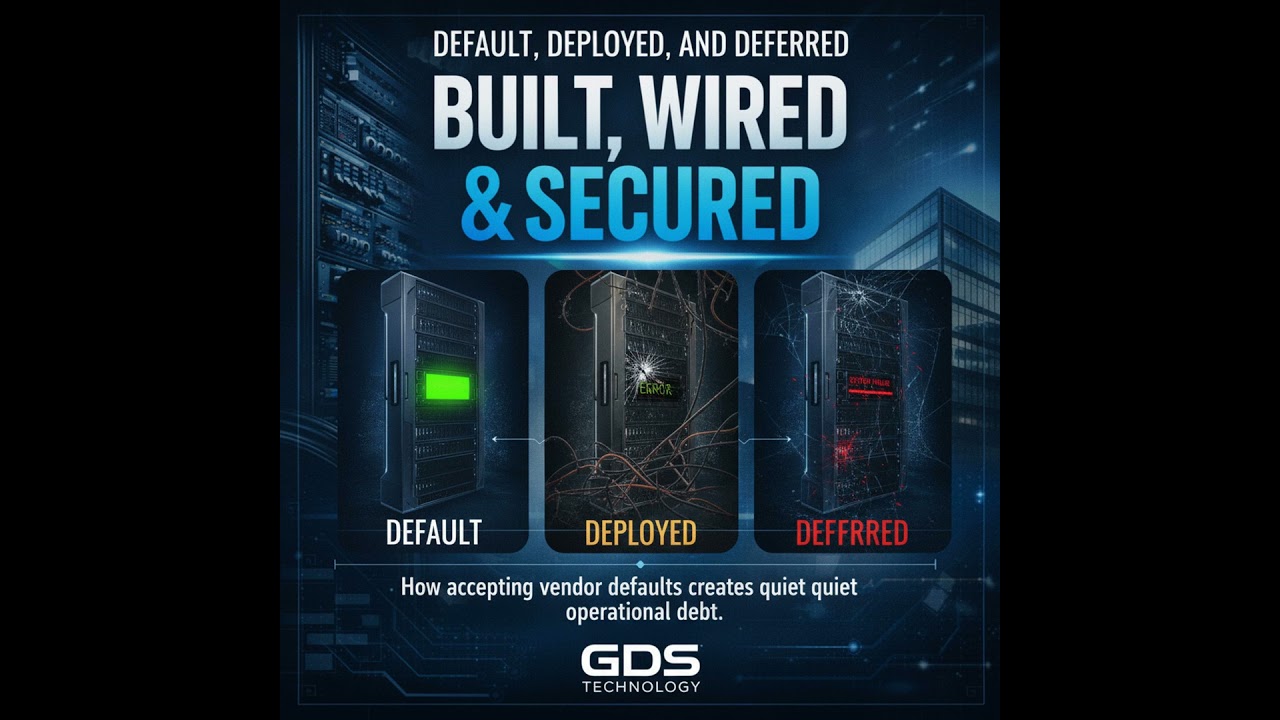
This episode of Built, Wired & Secured focuses on a problem that shows up in commercial buildings far too often: systems are installed, they pass a demo, and everyone moves on without ever turning vendor defaults into intentional operating standards. The result is quiet operational debt that stays hidden until it becomes a late-night call, a spike in utility costs, tenant complaints, or a preventable outage.
The conversation opens with a vivid scenario: a late-night maintenance issue where tenants report HVAC cycling, zones are stuck in economy mode, lights are flicking, and nobody can explain who approved the schedule. By morning, operations is dealing with angry emails, higher utility costs, and no documented decision trail. That is the core point of the episode: small undocumented configuration choices can create oversized downstream consequences.
Why Defaults Survive the Handoff
The discussion explains why default settings persist after installation. The answer is not a single failure. It is a mix of schedule pressure, vendor incentives, unclear ownership, and incomplete handoff practices.
- Installers are under pressure to reach turnover quickly.
- Owners want the building live and operational.
- Vendors want signoff once the system appears to work during a demo.
- Documentation often stops at basic functionality rather than capturing the real baseline configuration.
- Operations teams inherit systems without clear ownership of post-install settings.
The episode also highlights a practical reality: facilities teams do not always receive useful operational context. A username, a password, and a 200-page manual do not equal a usable baseline. Without a documented configuration state, teams cannot manage preventative work effectively because they do not know what normal is supposed to look like.
The Real Cost of “It Works at Install”
One of the strongest parts of the episode is how clearly it connects defaults to measurable consequences. The operational cost is not theoretical. It shows up in security posture, energy performance, alarm noise, tenant comfort, and after-hours labor.
- Security posture can erode when default states are never reviewed.
- Energy usage can drift upward in ways that are visible on monthly bills.
- Tenant comfort can degrade through poor scheduling or control logic.
- Diagnostics get noisier, making it harder to separate real problems from bad settings.
- Operations teams lose time troubleshooting at night instead of planning proactively.
The examples are especially practical. In one case, lighting remained in demo mode in a 150,000 square foot tower. The result was glare complaints from tenants and a utility increase of a few thousand dollars per month. In another, an HVAC economizer left at vendor defaults led to over-ventilation in winter, clogged filters, higher energy use, and disrupted maintenance cycles. The fixes were not massive capital projects. They were targeted configuration changes with outsized operational benefits.
How to Decide What to Fix Now
The episode does not argue that every system needs an extended overhaul. Instead, it introduces a risk-based decision model. The key question is simple: who is affected if this goes wrong?
- If tenant comfort is at stake, the baseline deserves immediate attention.
- If critical equipment could be impacted, stronger turnover controls are justified.
- If sensitive data or security systems are involved, hardening should not be deferred casually.
- If the risk is lower, document the defaults, add monitoring, and schedule a defined hardening window.
This framing matters because it replaces vague debate with a practical operating standard. The speakers argue that intentional decisions are always better than luck. Not every system needs six weeks of review, but every building team does need a repeatable way to decide which defaults are acceptable, which need immediate correction, and which can be addressed later with monitoring in place.
Strict Gates vs. Lightweight Change
A useful tension in the conversation is the debate between stricter turnover gates and lightweight operational changes. One view pushes for hard turnover requirements on anything that touches tenant comfort or security. The other emphasizes maintainability and the need for practical steps operations teams will actually continue using.
The episode lands on a tiered approach:
- Use strict commissioning and turnover gates for high-criticality systems.
- Use simple documented baselines and scheduled review windows for lower-risk systems.
- Define thresholds up front so teams are not improvising after handoff.
That resolution is one of the most useful takeaways from the episode because it balances operational discipline with real-world constraints.
The 30-Day Playbook
For facilities and property leaders who want immediate progress without disrupting tenants, the episode closes with a short list of high-impact actions. These recommendations are intentionally simple and operationally realistic.
- Record current baselines for schedules, admin accounts, and firmware.
- Match alarm behavior to actual tenant hours to reduce false wakeups.
- Tag critical endpoints so teams know which assets matter most.
- Maintain key spares and keep a firmware log.
- Run a one-day post-install audit and document any changes.
The speakers also reinforce three direct actions teams can take right away:
- Record baselines now.
- Protect critical endpoints with spares and firmware locks.
- Align alarm schedules to real occupancy.
Why This Matters for Owners and Operators
The bigger message in this episode is that defaults are not neutral. Leaving them unchallenged transfers risk into operations. That risk shows up in tenant experience, maintenance cost, energy use, and troubleshooting time. Converting defaults into documented baselines is not just a technical exercise. It is an operational control that protects budgets, staff time, and the credibility of the teams responsible for the building.
For owners, facilities leaders, and anyone responsible for keeping building systems reliable after turnover, this episode offers a practical framework: make baseline decisions visible, tie effort to risk, and focus on small reversible changes that create measurable stability. It is a strong reminder that long-term performance is shaped less by the install demo and more by what gets documented, reviewed, and maintained after the project closes.
Default Settings Feel Fast Until They Become Expensive
In building operations, some of the most expensive problems do not start with catastrophic failures. They start with quiet assumptions.
A system gets installed. It passes the demo. The building goes live. Everyone moves on. Then weeks or months later, operations gets the late-night call: HVAC is cycling, lighting behavior makes no sense, alarms fire at the wrong times, or energy costs suddenly look wrong. When someone finally digs into the issue, the explanation is painfully familiar: those were the default settings.
That is the core problem explored in this episode of Built, Wired & Secured. The discussion centers on the operational cost of leaving out-of-the-box settings in place across building systems and the practical steps owners and facilities teams can take to reduce that risk without causing disruption.
Operational Debt Starts Small
The episode opens with a realistic picture of how this problem shows up in the field. Tenants are reporting HVAC cycling. A building manager finds that multiple zones are stuck in economy mode. The only note from the vendor is that those were the default settings. Another example follows immediately: lights are flicking, tenants are calling, and nobody can say who approved the schedule.
By the next morning, the consequences are bigger than the original configuration issue:
- Tenant complaints are now visible and urgent.
- Utility usage has already increased.
- Operations has spent time reacting instead of planning.
- No one can point to a documented decision or owner.
That is operational debt in its most practical form. A small undocumented choice creates a long tail of cost, confusion, and avoidable effort.
Why Defaults Survive Turnover
One of the most useful parts of the conversation is that it does not blame a single stakeholder. Defaults persist because several incentives line up in the wrong direction.
Installers are moving fast to finish work and reach turnover. Owners want the building live. Vendors want signoff. If a system appears to work during a demo, changing settings can feel like adding risk, not reducing it. The project closes with the status of “working,” but that does not mean the environment is truly production-ready.
The handoff gap matters just as much. In many cases, documentation stops at proving the system can function. It does not capture the actual operating baseline that facilities teams need to manage the system responsibly. Operations inherits a system that behaves like a black box.
The episode makes this point clearly: giving a team usernames, passwords, and a large manual is not the same as giving them a baseline. Without a practical record of schedules, accounts, firmware, alarm logic, and expected behavior, preventative maintenance becomes guesswork.
The Cost Shows Up in More Than One Place
When defaults are left in place, the damage is rarely isolated. The episode describes a cascade effect that touches multiple parts of building operations at once.
- Security posture can weaken if systems are never hardened beyond vendor defaults.
- Energy performance drifts as schedules and control points stay generic instead of site-specific.
- Tenant comfort suffers when systems operate according to demo assumptions rather than occupancy reality.
- Alarms and diagnostics become noisy, making it harder to identify real incidents.
- Operations teams burn time at night and on weekends reacting to issues that should have been prevented.
That combination is what makes default-driven problems so expensive. They do not just create a single maintenance ticket. They create ongoing friction across budgets, tenant experience, and staff workload.
Two Examples That Make the Problem Real
The episode includes two short examples that show how minor settings can produce major outcomes.
In one project, lighting remained in demo mode inside a 150,000 square foot tower. That led to glare complaints from tenants and a utility impact of a few thousand dollars per month. Nothing about the problem sounded dramatic at first. It was not a failed device or a major outage. It was a small configuration state that stayed in place too long.
In another example, an economizer left at vendor defaults caused over-ventilation during winter. The result was clogged filters, increased energy use, and disrupted maintenance cycles. The fix was straightforward: correct the damper schedules and add one monitoring point. Once that was done, maintenance normalized and energy performance improved.
These examples matter because they reinforce a theme many building teams already know intuitively: small settings can carry large operating consequences. The right response is not to overengineer everything. It is to stop treating defaults as harmless.
A Better Standard: Risk-Based Decisions
The episode offers a practical framework for deciding where to invest effort. Instead of arguing that every setting needs deep review immediately, it recommends a risk-based approach.
The question is simple: who gets hurt if this stays wrong?
If the answer includes tenants, critical equipment, security, or sensitive data, the baseline should be hardened early and supported by stronger commissioning or turnover gates. If the risk is lower, the better move may be to document the current state, add lightweight monitoring, and schedule a deferred hardening window.
This is an important operational distinction. It allows teams to be disciplined without becoming paralyzed. Not every system needs six weeks of review. But every system does need an intentional decision path.
That is the real shift the episode advocates. Move from accidental defaults to documented choices.
Strict Turnover vs. Maintainable Operations
The conversation also surfaces a healthy tension between two common operating philosophies.
One perspective argues for hard turnover gates, especially on anything tied to tenant comfort or security. The concern is that lightweight approaches leave too much room for risk to slip through. The other perspective argues that strict standards only work if operations teams can maintain them in the real world. If the process is too heavy, it will be ignored or inconsistently applied.
The resolution is practical and worth adopting:
- Use strict gates for high-criticality systems.
- Use documented baselines and scheduled reviews for lower-risk systems.
- Define risk thresholds up front so there is no ambiguity during turnover.
That tiered model is useful because it supports both accountability and sustainability. It respects the reality that teams need controls they can continue using after the project team is gone.
A 30-Day Playbook Building Teams Can Actually Run
The closing section of the episode is especially strong because it turns the discussion into action. For facilities leaders who want to reduce operational debt quickly and without tenant disruption, the speakers recommend a short list of immediate steps.
- Record current baselines, including schedules, admin accounts, and firmware versions.
- Align alarms to actual tenant hours so teams are not chasing false wakeups.
- Tag critical endpoints so the most important assets are easy to identify.
- Keep spares on hand and maintain a firmware log.
- Run a one-day post-install audit and document any resulting changes.
They also summarize the highest-value actions in even simpler terms:
- Record baselines now.
- Protect critical endpoints with spares and firmware locks.
- Align alarm schedules to real occupancy.
These recommendations stand out because they are small, reversible, and practical. They do not require a major shutdown, a full redesign, or months of committee review. They are the kinds of actions that reduce risk quickly and create a more stable operating baseline.
What Owners and Facilities Leaders Should Take From This
The biggest lesson from the episode is that defaults are not just technical details. They are business decisions by omission. If nobody makes them explicit, operations still pays for them later.
For owners, that means hidden exposure in energy spend, tenant satisfaction, and asset reliability. For facilities teams, it means more time spent reacting and less time spent improving. For any organization responsible for modern building environments, the goal should be clear: turn inherited defaults into documented, intentional baselines as early as possible.
That is where a true technology partner adds value. The job is not just to install systems that appear to work. It is to help owners and operators build environments that remain understandable, supportable, and resilient long after turnover.
If this episode sounds familiar, it is worth listening to the full conversation and using the checklist approach it outlines. A few disciplined reviews now can prevent a lot of late-night troubleshooting later. Listen to the episode and use it as a starting point for your next 30-day baseline review.